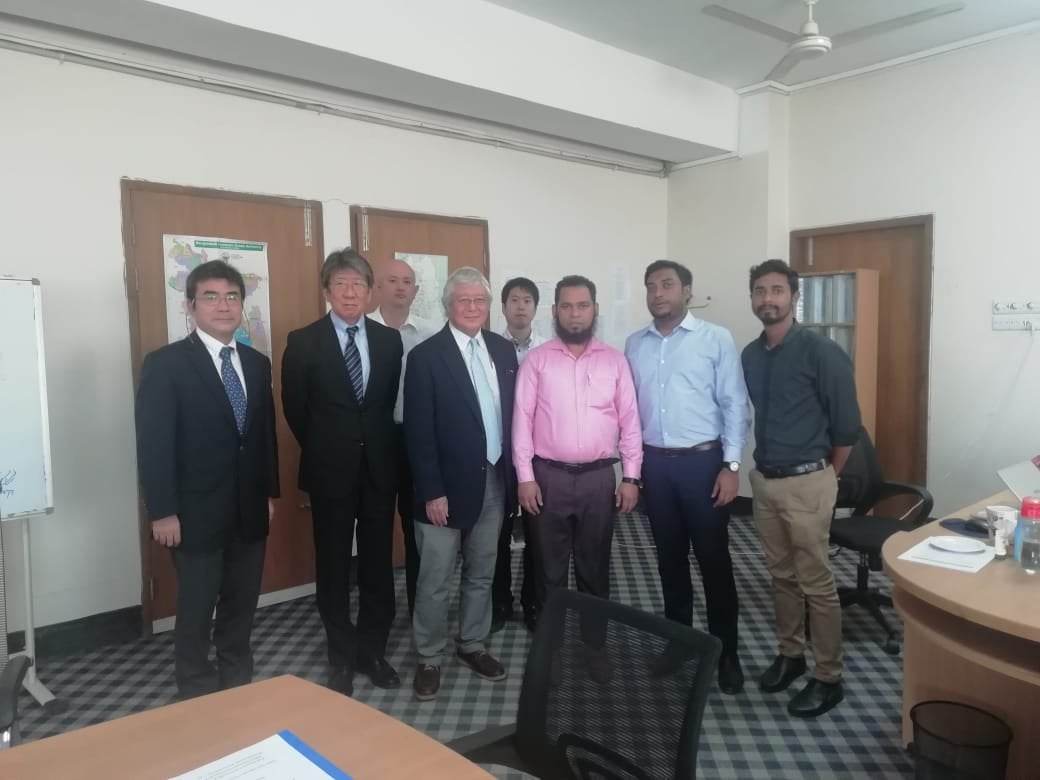
The Japan International Cooperation Agency (JICA) undertook a preparatory study to support the promotion of foreign direct investment (FDI) in Bangladesh, including the identification and assessment of suitable locations for the development of Economic Zones (EZs). To support this initiative, JICA engaged Young Consultants in association with Nippon Koei to conduct a comprehensive site selection and assessment exercise in Dhaka Division. The assignment aimed to evaluate potential sites based on their physical characteristics, engineering and infrastructure requirements, environmental and social conditions, accessibility, and preliminary financial implications, thereby providing an informed basis for identifying suitable locations for future Economic Zone development.
The assignment commenced with a review of available background information on potential sites, followed by field visits to examine their location, size, boundaries, surrounding land uses, existing infrastructure, and overall suitability for development. The assessment considered both on-site and off-site conditions, with the objective of identifying significant constraints that could affect project feasibility. Particular attention was given to potential deal-breakers, including issues that might be impossible to mitigate or could require mitigation measures that would be financially prohibitive. These findings were considered in evaluating the relative suitability of potential sites for establishing Economic Zones.
A review of the surrounding areas was undertaken to understand the regional context and connectivity of each site. The team examined nearby urban and rural communities, including their approximate distances from the proposed locations, and identified the availability and proximity of essential community facilities such as hospitals and schools. Access to key regional infrastructure, including airports, railway networks, seaports, and national highways, was also considered. The assessment further reviewed nearby residential, commercial, agricultural, and other land uses to identify possible conflicts with large-scale industrial and economic development, as well as environmental or social issues in the surrounding areas that could affect site development and operation.
The physical and engineering assessment focused on the characteristics and development constraints of the individual sites. The team examined the landscape and topography, including floodplains, water bodies, rivers, hills, and vegetation, while reviewing soil characteristics through visual observation without conducting soil testing. Other considerations included climatic conditions, earthquake-related risks, vegetation density, existing land uses, agricultural activities, and industrial operations. Existing buildings and infrastructure, such as houses, religious structures, historical sites, bridges, dams, retaining walls, and other physical features, were documented where present. The team also considered the presence of informal or illegal settlements and identified site-specific constraints that could affect land development, infrastructure provision, or project implementation.
Environmental screening was conducted to identify potential risks and infrastructure requirements associated with developing an Economic Zone at each location. This included reviewing the potential for flooding and erosion, the presence and implications of rivers and lakes, and whether land filling or changes in site elevation might be necessary. The assessment also considered the presence of wetlands or protected areas within the site and its surrounding area, including locations within an approximate 10-kilometre radius. Additional issues examined included existing pollution sources, possible contamination of the site or adjoining land, the availability and sources of clean water, wastewater discharge and treatment facilities, and nearby solid waste disposal arrangements. Potential environmental constraints and issues requiring further investigation or mitigation were documented as part of the site selection process.
The team also assessed the social characteristics of the proposed sites and their surrounding communities. This involved reviewing the size and characteristics of nearby urban and rural populations, existing housing conditions, the availability of community facilities and services, and the principal livelihoods of local residents, including farming, fishing, livestock rearing, and small businesses. Particular attention was given to the potential effects of Economic Zone development on women and their livelihoods, as well as the possibility of displacement or resettlement. Where relevant, the assessment considered the approximate number of people who might be affected and identified social constraints that could influence site suitability and implementation.
The financial and infrastructure-related assessment focused on preliminary cost considerations associated with developing the proposed Economic Zones. The team reviewed potential land development and site preparation costs, along with the costs of connecting essential utilities such as gas, electricity, and telephone services and other related infrastructure. Consultations with relevant government officials supported the collection and verification of information for the assessment. The findings from the site visits, background reviews, physical and environmental observations, social screening, infrastructure assessments, and preliminary cost considerations were consolidated into a Final Site Assessment Report submitted to JICA to support its preparatory work for the Foreign Direct Investment Promotion Project in Bangladesh.
Key Assignment Details
Assignment Name: Site Selection of Economic Zone for JICA Preparatory Study for the Foreign Direct Investment Promotion Project in Bangladesh
Client: Japan International Cooperation Agency (JICA)
Location: Dhaka Division, Bangladesh
Contract Value: Approximately US$61,500
Duration: June 2014 – September 2014
Reported Assignment Duration: 3 months
Total Staff-Months: 8 man-months
Associated Consultants: Nippon Koei; KRI International Corp.
Senior Professional Staff Involved: Eng. Mohiuddin Ahmed, Civil Engineer; Mr. Jubaer Arefin, Environmental Research Assistant; Mr. Moshiur Rahman, Social Expert; Dr. Kamal Hossain, Social Expert; Mrs. Sadya Islam, Urban Planner; Mr. Debbrata Ukil, Power Consultant; and Mr. Safiul Islam, Power Consultant
Principal Services Provided: Background review and site visits; assessment of surrounding communities and regional infrastructure; physical and engineering screening; environmental and social assessment; preliminary land development and utility cost assessment; consultation with government officials; and preparation of the Final Site Assessment Report for JICA.
Sat - Thu: 09:30AM - 05:30PM
Fri: Closed